

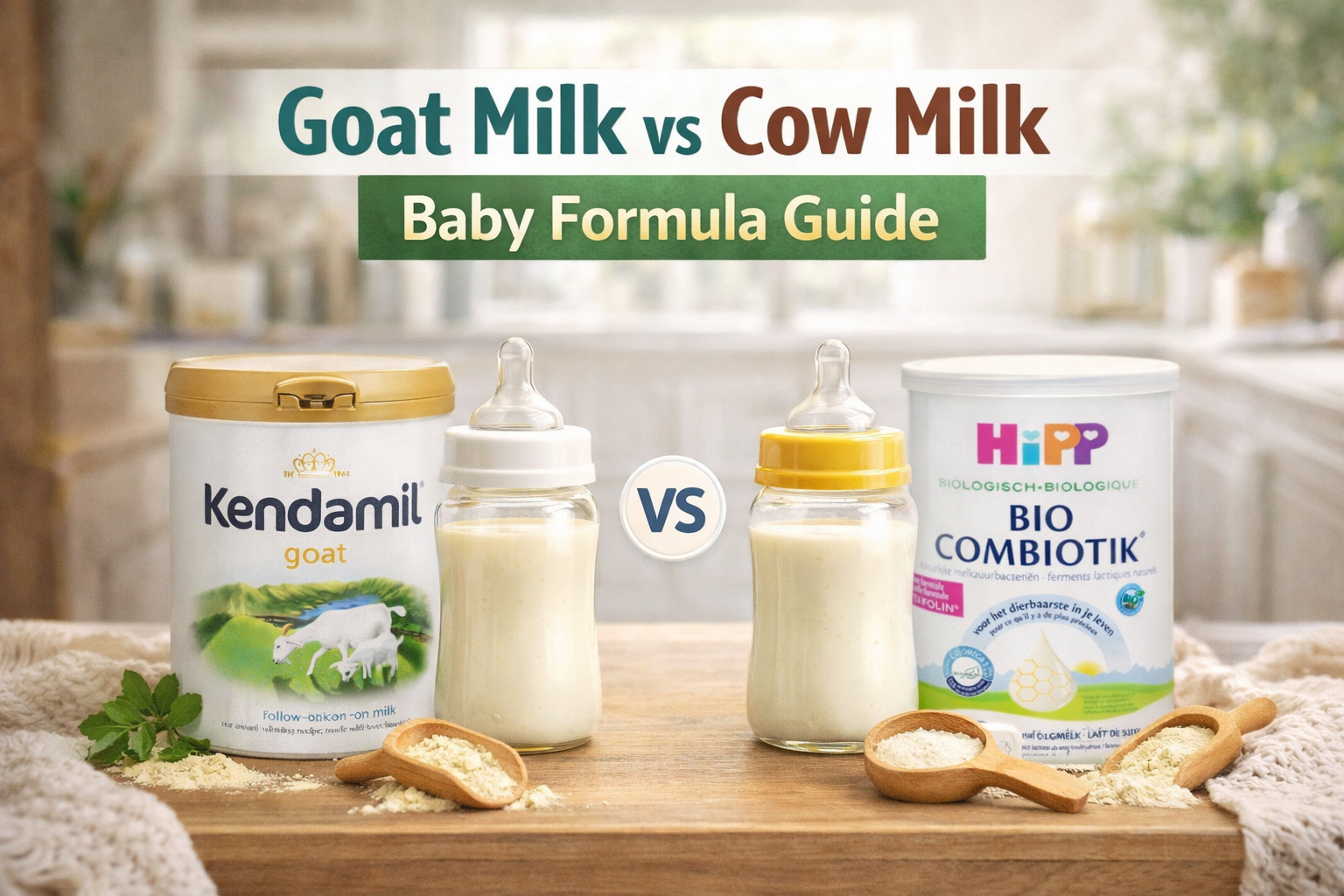
Goat Milk Formula vs Cow Milk Formula: Which Is Better for Babies?
"March Sale! Get 5% off! Promocode: MAR2026" ×
Goat Milk Formula vs Cow Milk Formula: Which Is Better for Babies?

Goat Milk Formula vs Cow Milk Formula: Which Is Better for Babies?

Choosing a baby formula can feel stressful—especially if your little one is gassy, fussy, or having trouble with stools. One of the most common questions parents ask is:

“Is goat milk formula better than cow milk formula for babies?”

The honest answer is: it depends on your baby. Both goat milk and cow milk formulas are designed to be nutritionally complete. The biggest differences usually come down to how the proteins form curds in the stomach, how the fats are structured, and how your baby’s digestion responds.

Understanding Baby Formula Basics

Infant formula—whether goat-based or cow-based—is designed to provide complete nutrition when breastfeeding isn’t possible or isn’t enough. High-quality formulas typically include:

  • Proteins for growth and development
  • Carbohydrates (often lactose) for energy
  • Fats for brain and nervous system development
  • Vitamins & minerals (iron, calcium, vitamin D, etc.)
  • DHA to support brain and eye development (common in European formulas)

If a baby has trouble with one formula, it’s often not because the formula is “bad”—it’s because the baby’s digestion is still developing and may respond differently to certain protein/fat structures.

What Is Goat Milk Formula?

Goat milk formula uses whole goat milk (or goat milk ingredients) as the base. Many parents choose it because it may feel gentler for babies who experience mild digestive discomfort on some cow milk formulas.

Common reasons parents try goat milk formula
  • Baby seems gassy or fussy after feeds
  • Stools look uncomfortable or baby strains often
  • Baby spits up frequently (not always formula-related, but sometimes improved)
  • Parents want a premium option with a “whole milk” base

Popular goat milk formula options parents look for include LittleOak, Kendamil Goat, and Jovie Goat (availability varies by region and stage).

What Is Cow Milk Formula?

Cow milk formula is the most common type of infant formula worldwide. It’s made by adjusting cow milk’s protein and nutrient profile to make it suitable for infants.

Many babies do beautifully on cow milk formula—especially when using premium European options such as HiPP, Holle, Aptamil, and Kendamil.

Cow milk formula is often chosen because
  • It’s widely studied and commonly recommended
  • There are many specialized options (sensitive, anti-reflux, HA/hypoallergenic lines)
  • Most babies tolerate it very well

Goat vs Cow Formula: The Key Differences

1) Protein Structure and Curds in the Stomach

One of the biggest differences parents notice is digestion. During digestion, milk proteins form “curds” in the stomach. Cow milk tends to create firmer curds for some babies, while goat milk often forms softer curds. For certain babies, softer curds may be easier to break down—potentially leading to less gassiness or fussiness.

2) Fat Globules and Digestive Comfort

Goat milk naturally has smaller fat globules than cow milk. In simple terms, smaller fat particles may be easier for a developing digestive system to handle. This doesn’t guarantee fewer tummy troubles, but it’s one reason some parents report improved comfort after switching.

3) Taste and Acceptance

Taste matters—especially for babies who are already picky or mid-transition. Goat milk formula is often described as mild and creamy. Premium cow formulas can also taste great, particularly those that use lactose as the main carbohydrate and avoid heavy flavoring additives.

4) Allergies: An Important Clarification

Important

Goat milk formula is not hypoallergenic. If your baby has a confirmed cow milk protein allergy, goat milk proteins can still trigger a reaction. In that case, pediatricians often recommend a medically appropriate option (such as extensively hydrolyzed or amino-acid based formulas).

Which One Might Be Better for Your Baby?

Instead of thinking “which one is best,” it helps to think: which one is best for my baby right now? Here are practical scenarios parents commonly experience.

Goat milk formula may be worth considering if…
  • Your baby has mild digestive sensitivity (gas, fussiness, harder stools)
  • Your baby seems uncomfortable after feeds even with good burping routines
  • You want a premium whole-milk base and a gentle approach
Cow milk formula may be ideal if…
  • Your baby is thriving with normal digestion and steady growth
  • You need a specialized formula option (anti-reflux, HA lines, etc.)
  • You’re staying within a routine that is already working well

Signs a Formula May Not Be a Great Fit

Babies can have adjustment periods, so not every change means a formula is “wrong.” But these signs may suggest it’s time to talk with your pediatrician or consider a different option:

  • Persistent vomiting (more than typical spit-up)
  • Blood or mucus in stools
  • Hives, facial swelling, or wheezing (seek medical help)
  • Poor weight gain or feeding refusal
  • Constant distress that doesn’t improve with routine feeding adjustments
Quick reminder

New formulas can take a little time. Many parents give a change 7–14 days unless there are clear allergy symptoms or severe reactions.

How to Switch Formulas Safely

If you decide to switch from cow milk formula to goat milk formula (or the other way around), a gradual transition is often easier on digestion. Here’s a simple approach many families use:

  • Days 1–2: 75% current formula + 25% new formula
  • Days 3–4: 50% current formula + 50% new formula
  • Days 5–6: 25% current formula + 75% new formula
  • Day 7: 100% new formula

During a switch, keep feeding routines consistent: similar bottle type, similar feeding pace, and frequent burping. Small routine changes can make a big difference in comfort—regardless of formula type.

Why Many Parents Choose European Baby Formulas

Many families prefer European baby formulas because of strict ingredient standards and strong quality controls. Parents also like the “clean label” approach many European brands take.

What parents like about European formulas
  • Strict sourcing and production standards
  • Many options with simple ingredient lists
  • DHA is commonly included in infant formulas
  • Premium brands available in both cow and goat milk options

At Euromallusa, we focus on premium European options that parents trust—whether you’re choosing cow milk formula, goat milk formula, or looking for a gentle option for sensitive tummies.

Frequently Asked Questions

Is goat milk formula easier to digest?

For some babies, yes. Goat milk tends to form softer curds during digestion, which can be gentler for certain infants. Results vary from baby to baby.

Can goat milk formula help with constipation?

Some parents report improved stool comfort, but constipation can have many causes (hydration, mixing accuracy, stage changes, or simply a developing digestive system). If constipation is persistent, check with your pediatrician.

Is goat milk formula good for reflux?

Reflux is common in infancy. Sometimes comfort improves with feeding pace, smaller feeds, and upright time after bottles. If reflux is severe, your pediatrician may recommend a formula specifically designed for reflux.

Which formula is closest to breast milk?

No formula is identical to breast milk, but premium formulas aim to get close in nutrient balance. Some parents feel goat milk is closer in digestibility for their baby, while many babies thrive on cow milk formulas as well.

Final Thoughts

Goat milk formula and cow milk formula can both be excellent choices. The best option is the one your baby tolerates well, grows well on, and fits your family’s feeding routine.

If you’re considering a switch, focus on gentle transitions, consistent feeding routines, and watching your baby’s cues. And if you ever suspect an allergy or your baby is struggling significantly, it’s always best to speak with a pediatrician.

At Euromallusa, we curate premium European baby formulas—both cow and goat—trusted by parents worldwide.

Back to top

Loading...