

Short answer: Bubbles can form when formula is mixed. Follow the exact product label, including its mixing method and water-to-powder ratio; do not replace required shaking with swirling. Once fully mixed, you can let bubbles settle briefly before feeding. Foam alone cannot tell you whether a bottle is safe.
If you have ever mixed a bottle and watched foam rise to the top, you are not alone. Mixing can introduce air. Before changing your routine, check the preparation instructions on the exact product you use. Correct dilution, clean equipment and safe storage matter more than removing every bubble.
This guide explains what causes foam, how to tell ordinary bubbles apart from swallowed air, and simple ways to mix formula with less froth. As always, this is general information, not medical advice — talk with your pediatrician about anything specific to your baby.
Table of Contents
- Is foam in baby formula normal?
- What causes bubbles and foam in formula
- Foam on top vs. air bubbles inside the milk
- How to mix formula with less foam (step by step)
- Does foamy formula cause gas?
- Bottles and feeding tips that reduce swallowed air
- When powder isn't the only option: ready-to-feed
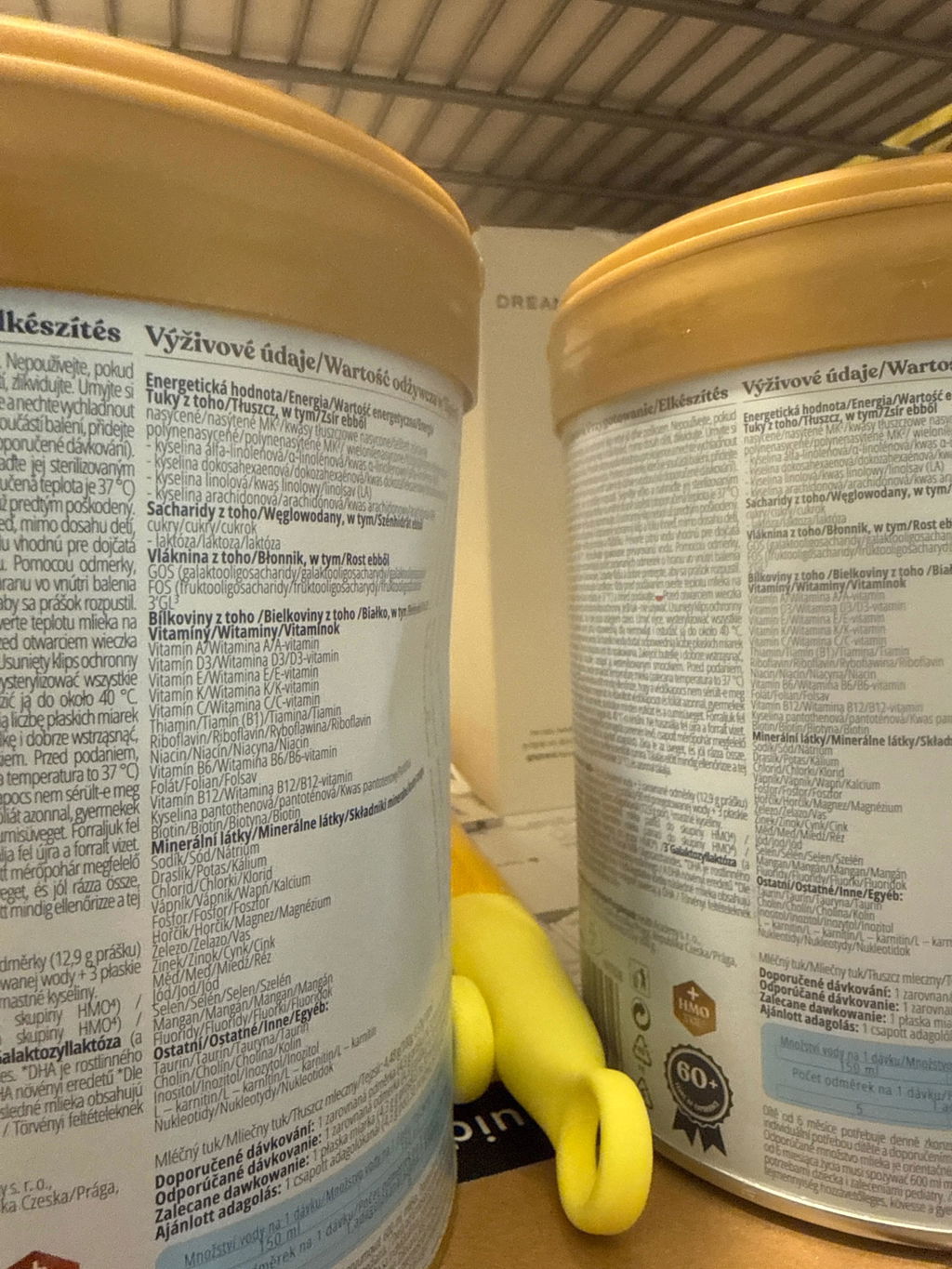
- A note on European formulas and foam
- Who this matters most for & when to ask your pediatrician
- Frequently asked questions
Is foam in baby formula normal?
Yes. A layer of foam or a scattering of bubbles after you mix powdered formula is normal and expected. When you combine powder with water and move the bottle, you are essentially aerating the liquid — the same way a milk frother puts foam on a latte. The proteins in milk-based formula trap tiny air pockets, and those pockets collect at the top as foam.
Foam alone does not establish freshness, safety or nutritional quality. Check the use-by date, packaging, preparation and storage. Do not use a product with damaged packaging or signs of spoilage. For a preparation refresher, see how to prepare European baby formula, alongside your product label and pediatrician’s guidance.
What causes bubbles and foam in formula
A few everyday things make some bottles foamier than others:
- Shaking. This is the biggest factor. Vigorous shaking forces air into the liquid and creates a thick head of foam. As the American Academy of Pediatrics notes, the more mixing and shaking involved, the more air bubbles get into the mix.
- The powder itself. Milk proteins naturally create a little foam when they meet water and movement. Recipes differ, but the amount of foam is not a reliable test of product quality or safety.
- Water guidance. Use safe water and follow the product’s preparation directions. Do not change the amount or preparation temperature just to reduce foam.
- Dispensing into a narrow bottle. A fast pour into a small opening can trap more air than a slow, steady one.
Mixing can introduce air, but an unexpected change should prompt a check of the product label, packaging and preparation steps.
Foam on top vs. air bubbles inside the milk
It helps to separate two things parents often lump together:
| Foam on top | Air bubbles inside the milk | |
|---|---|---|
| What it looks like | A frothy cap that floats above the liquid | Small bubbles suspended throughout the bottle |
| Why it matters for baby | Mostly cosmetic; sits on top and is easy to let settle | Can be swallowed during a feed, which may leave some babies gassier |
| Simple fix | Let the bottle rest 1–2 minutes before feeding | Mix fully as directed on the label; keep the nipple full of milk while feeding |
Foam can appear at the surface while smaller bubbles remain in the liquid. Letting a freshly mixed bottle settle briefly may help; it does not replace correct preparation or safe storage.
How to mix formula with less foam (step by step)
Start with the product instructions and clean feeding equipment:
- Add water first, then powder. Measure the water into a clean bottle before adding powder, and use the scoop that came in that specific tin. This keeps the ratio accurate, which matters far more than foam.
- Mix completely as directed. If the label says to shake, shake. Swirling is not a universal substitute, and visible undissolved powder means the bottle needs further attention to the preparation instructions.
- Allow bubbles to settle briefly. The American Academy of Pediatrics suggests letting freshly mixed powdered formula settle before serving. Keep this within safe preparation and feeding time limits.
- Warming is optional. Formula does not need to be warmed. If you warm a bottle, never microwave it and check the temperature before feeding.
- Prepare only what your baby will drink. Mixing smaller, accurate amounts means less waste and less re-shaking. If you tend to over-prepare, our guide on how much formula your baby needs by age can help you dial in the right amount.
Use prepared formula within 2 hours of preparation and within 1 hour after feeding starts. If feeding has not started, refrigerate promptly and use within 24 hours. Discard leftovers after feeding. Follow any shorter product-specific limit. See how to store baby formula safely. Babies younger than 2 months, born prematurely or with weakened immune systems need extra precautions; ask their clinician and consult the CDC guidance below.
Does foamy formula cause gas?
Swallowed air can contribute to gas. The American Academy of Pediatrics suggests letting freshly mixed formula settle and trying feeding adjustments. Foam alone cannot explain persistent discomfort; speak with your pediatrician about ongoing symptoms.
After mixing fully according to the label, let bubbles settle briefly, keep the bottle tilted so the nipple stays full of milk (not half air), and burp your baby during as well as after each feed. Gas is a normal part of infant life, and some fussiness or spit-up is to be expected regardless of how carefully you mix. If your baby is frequently uncomfortable, our overview of why babies spit up after feeding and when it's normal is a helpful read, and your pediatrician can help you sort out what's typical for your little one.
Bottles and feeding tips that reduce swallowed air
Beyond mixing, the bottle and feeding position play a role in how much air ends up in your baby's tummy:
- Keep the nipple full. Hold the bottle at an angle so milk — not air — fills the nipple throughout the feed.
- Consider a slower nipple flow. The AAP suggests slowing the flow of liquid into a baby's mouth can help some babies swallow less air. Flow that is too fast encourages gulping.
- Try a vented or anti-colic–style bottle. Some bottles are designed to vent air away from the milk. The AAP notes that trial and error with different bottles and nipples tends to be the best approach, since every baby is different. You can compare bottle and accessory options in our Feeding Time Favorites collection.
- Burp during and after feeds. A mid-feed burp break gives swallowed air a chance to come up before it travels further.
When powder isn't the only option: ready-to-feed
Ready-to-feed formula is already diluted: do not add water. Follow its container instructions, which may require shaking before opening or feeding. Liquid concentrate is different and must be diluted exactly as directed. Choosing ready-to-feed does not guarantee relief from gas. Compare the preparation differences in ready-to-feed vs. powder formula. For a current store option, see Holle PRE/1 ready-to-feed 200 mL; check the exact label, age guidance, pack and fulfillment option before ordering.
A note on European formulas and foam
Parents sometimes ask whether HiPP, Holle or Kendamil produces less foam. This article does not establish a brand ranking. Mixing methods and recipes differ, so follow the instructions on the exact product instead of changing brands solely to reduce foam.
If you and your pediatrician decide to change formula, check the exact product and age guidance before choosing a pack. Browse our single-can selection or formula collection for current options. Always read the label on the product received.
Who this matters most for & when to ask your pediatrician
If your baby seems uncomfortable after feeding, review preparation and feeding technique with your pediatrician. Avoid changing dilution or switching formula solely because you see foam.
Reach out to your pediatrician if your baby is consistently refusing bottles, spitting up forcefully or in large amounts, not gaining weight as expected, or seems in real distress during or after feeds. Do not dismiss feeding concerns just because bubbles are also present. This article is general information and does not replace your pediatrician's advice.
Frequently asked questions
Is it safe for my baby to drink the foam?
Foam alone cannot determine whether formula is safe. Check the label, use-by date, packaging and preparation and storage conditions. After correct mixing, you can let bubbles settle briefly before feeding.
Should I skim the foam off the top?
Routine skimming is not necessary. Let bubbles settle briefly after mixing according to the label rather than changing the formula’s dilution.
Does shaking or swirling formula make a difference?
Shaking can introduce air, but it may be required to mix a product properly. Follow the label’s method; do not assume swirling will fully dissolve every formula.
Why is my formula suddenly foamier than before?
Common reasons include switching brands or stages, a change in your water, or simply shaking harder than usual. Check that you're using the scoop and ratio for the exact product in front of you, and remember that recipes vary between formulas.
Does foam mean I'm mixing the formula wrong?
Not necessarily. Foam is mostly about movement and air, not ratio. The more important thing is to measure water and powder exactly as your box directs. If powder remains undissolved after the required mixing method, re-check the product instructions before feeding.
Do ready-to-feed formulas foam?
Ready-to-feed formula can develop bubbles when moved or shaken. Follow its container instructions, including shaking when directed, and do not add water.
Recommended from EuromallUSA
- Best-selling single cans — try a new European formula by the loose can before buying a full case
- Trusted European baby formula — HiPP, Holle, Kendamil, Aptamil and more specialty lines
- Holle PRE/1 ready-to-feed 200 mL — review the exact label and available pack options
- Feeding Time Favorites — bottles, cups and feeding accessories
Reordering the same formula? Check the product page for any available subscription option, current price and delivery terms before subscribing.
Related Articles
- How to Prepare European Baby Formula: Step-by-Step Guide
- Ready-to-Feed vs Powder Formula: Which Is Better for Your Baby?
- How to Store Baby Formula Safely: Powder, Mixed & Ready-to-Feed
- Why Babies Spit Up After Feeding (And When It's Normal)
- How Much Formula Should My Baby Eat? Amounts by Age
- HiPP vs Holle vs Kendamil vs Aptamil: Which Formula Is Best?
The bottom line
Bubbles can form during formula mixing. Follow the exact label, fully mix the formula and keep to safe preparation and storage limits. Let bubbles settle briefly if needed. Ready-to-feed instructions may still require shaking; never add water to ready-to-feed formula. Ask your pediatrician about persistent feeding concerns.
Ready to find the right formula for your baby? Shop EuromallUSA's single cans and best sellers, and check the exact product label and current purchase options before ordering.
Sources
- American Academy of Pediatrics — Gas Relief for Babies
- CDC — Infant Formula Preparation and Storage
- FDA — Handling Infant Formula Safely
This article is for general informational purposes only and is not medical advice. It does not replace guidance from your pediatrician. Infant formula ingredients and preparation instructions can vary by market and may change over time — always follow the current label on your packaging.